Help center
Open dashboard

Best Practices for Project Management in Atarim

Stages, tasks, boards, automation and time tracking — how to set each up so the project runs itself.
Atarim team Updated 6 Aug 2026 · 4 min read
Tips, Tricks, and Best Practices
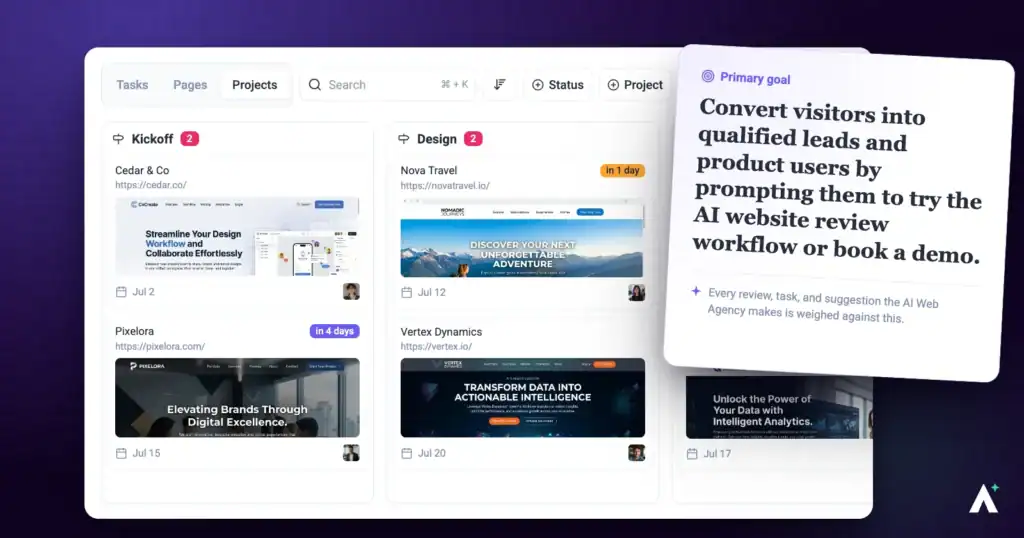
Atarim project board organised into clear delivery stages
Before you start

Relevant for

  • Project Managers, Design Leads and Team Members running delivery work.

Required knowledge

  • Basic familiarity with the Atarim dashboard and task management.

Tools & resources needed

  • Access to the Atarim dashboard, plus any third-party integrations your team uses.

Four things make the difference between a project you’re constantly chasing and one that reports on itself: clear stages, tasks with owners, a board people actually look at, and automation for the repetitive parts.

Status and ownership visible without asking anyone.

Four things make the difference between a project you’re constantly chasing and one that reports on itself: clear stages, tasks with owners, a board people actually look at, and automation for the repetitive parts.

1. Set Project Goals and Stages

Stages are what let anyone answer “where is this” without having to ask you.

Instructions:
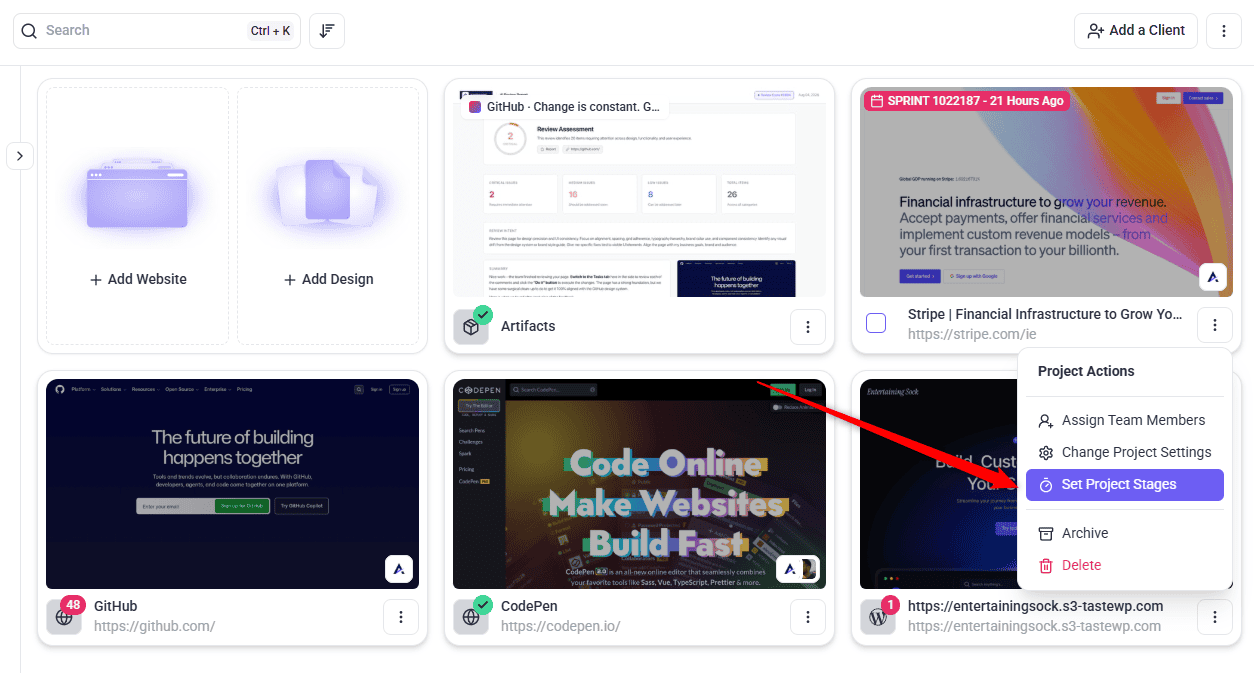
  • Go to the Projects screen and find the project.
  • Open its project settings.
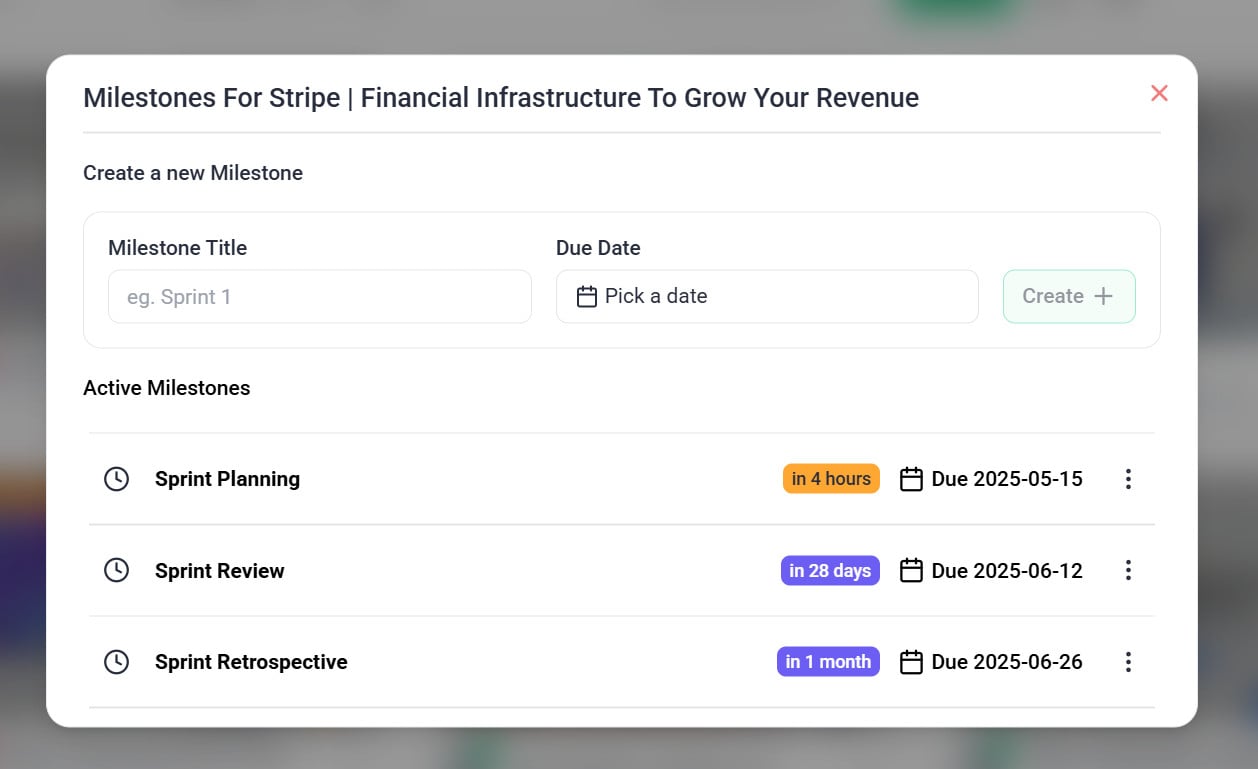
  • Define the stages and their due dates. Everyone can see what phase the work is in and what’s due next.
  • Creating a project stage with a due date
    Creating a stage
    Project stages and their due dates shown on a project
    Stage deadlines on the project
    Review and update stages as the project moves
    Stale stages are worse than none — a board showing “Design” three weeks after design finished teaches people to stop trusting it. Learn More About Project Stages
    Stage changes don’t notify anyone
    Stages are for visibility, not communication. If someone needs to know you’ve moved into review, tell them directly.

    2. Create Tasks with Owners

    A task that belongs to everyone belongs to nobody, so give each one an owner as you create it.

    Instructions:
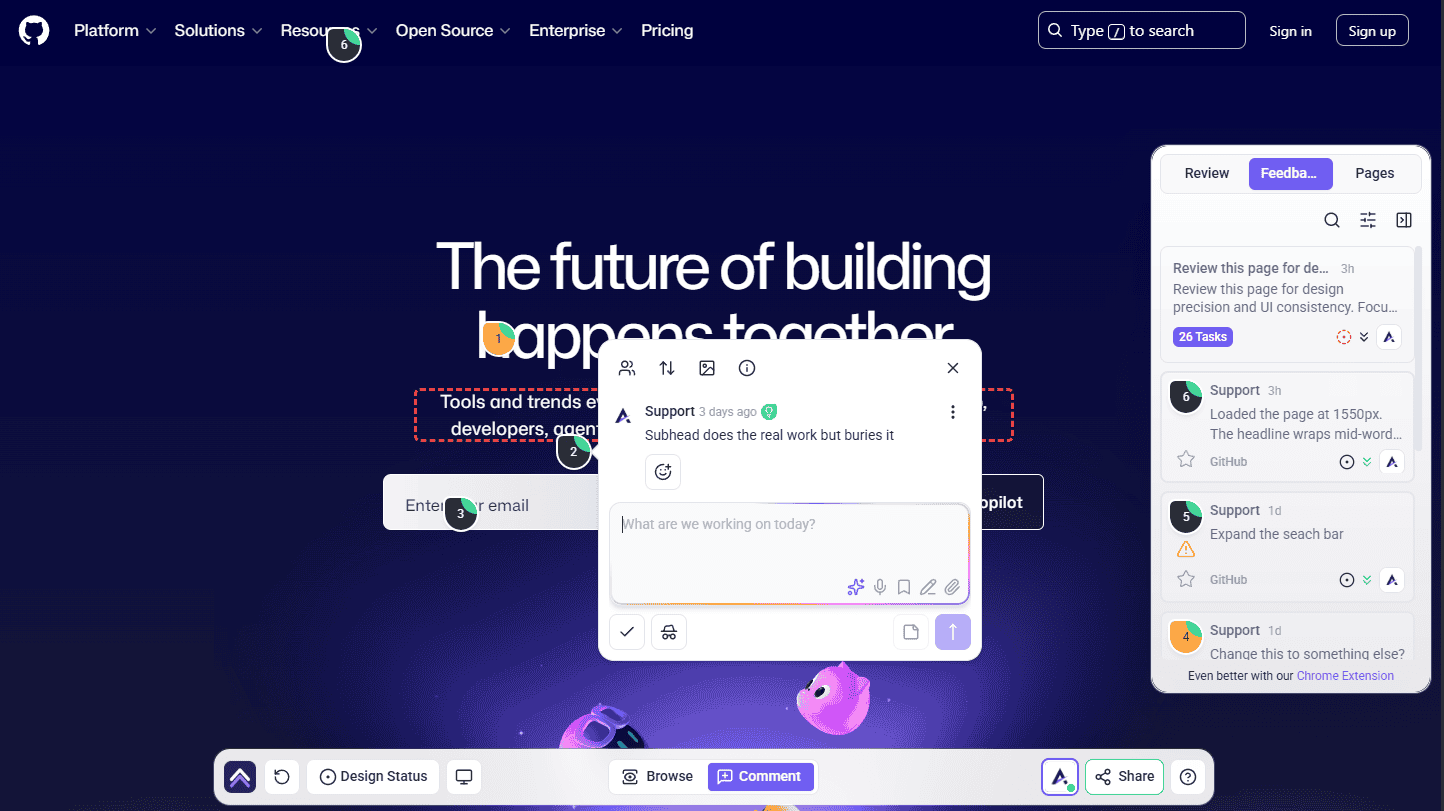
  • Create tasks within the project.
  • Assign each one to a team member. Accountability is explicit rather than assumed.
  • Use comments on the task for ongoing updates and feedback.
  • A task with an assignee and comments
    Comments keep updates on the task
    Break large tasks into smaller ones
    Progress becomes visible, and nothing sits at ninety per cent complete for a week. Discover How To Create A Task
    Note
    Use internal tasks for work the client shouldn’t see. They’re hidden from clients and guests entirely, and they don’t send notification email. Explore Internal Tasks

    3. Track Progress on the Board

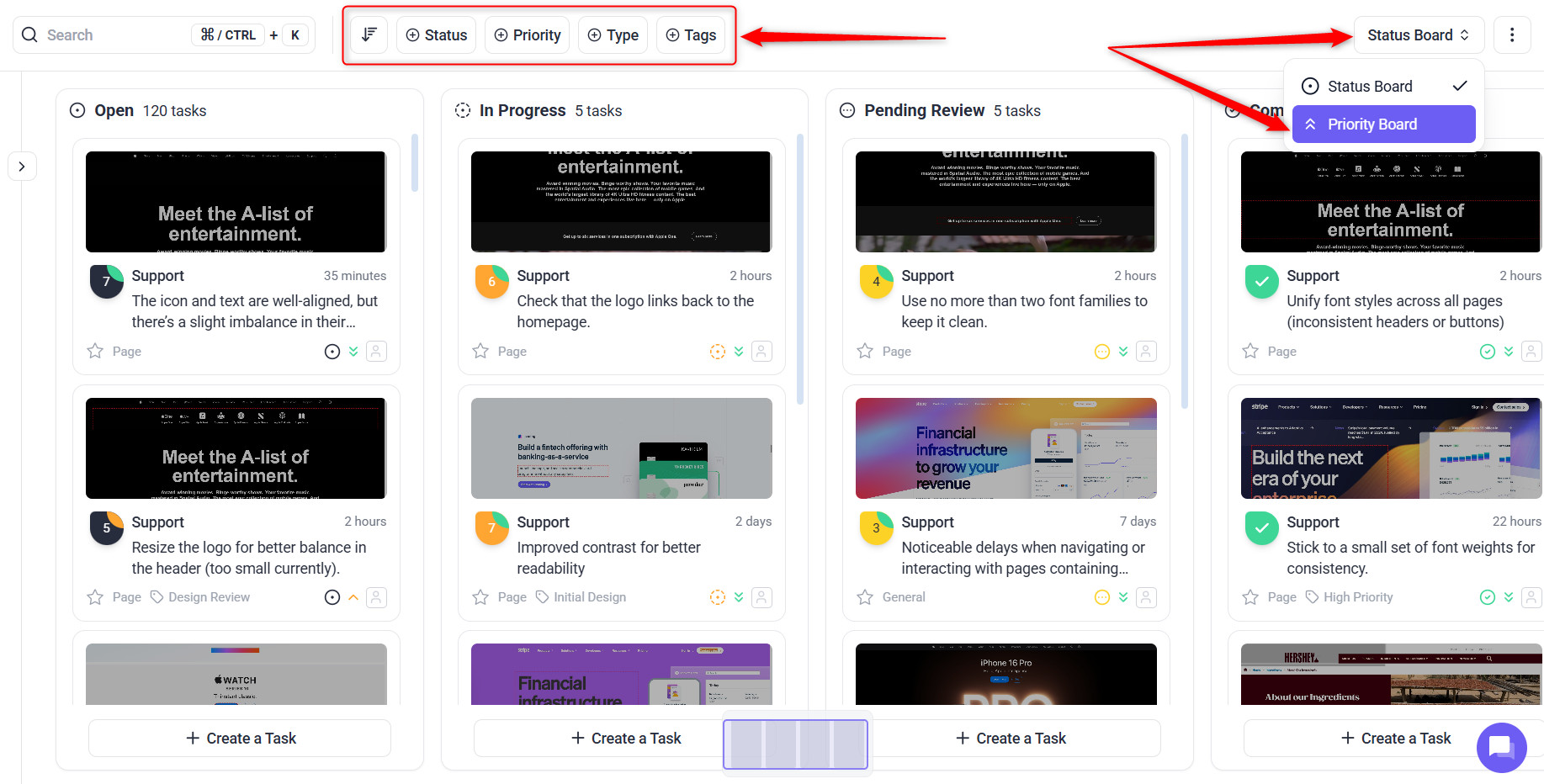
    Boards group tasks two ways, and each answers a different question.

    Board viewColumnsAnswers
    StatusOpen, In Progress, Pending Review, CompleteWhere is everything in the process?
    PriorityLow, Medium, High, CriticalWhat should we do next?
  • Open the project’s board view.
  • Switch between Status and Priority depending on the question you’re asking.
  • Move tasks between columns as work progresses.
  • Filter by team member or priority to narrow the view.
  • Tasks tracked in the board view
    Tracking tasks on the board
    You can set status and priority from the task itself
    As well as by dragging. On a busy board with many columns, opening the task and setting the value directly is often quicker and less error-prone than dragging across the screen.
    Hold a short weekly review with the board open
    Update statuses, close finished work, and re-prioritise what’s left. Fifteen minutes a week keeps the board trustworthy, which is the only thing that makes it useful. Explore Kanban Boards

    4. Automate the Repetitive Parts

    Automate the chasing and the handoffs, so people spend their attention on the work itself.

    Instructions:
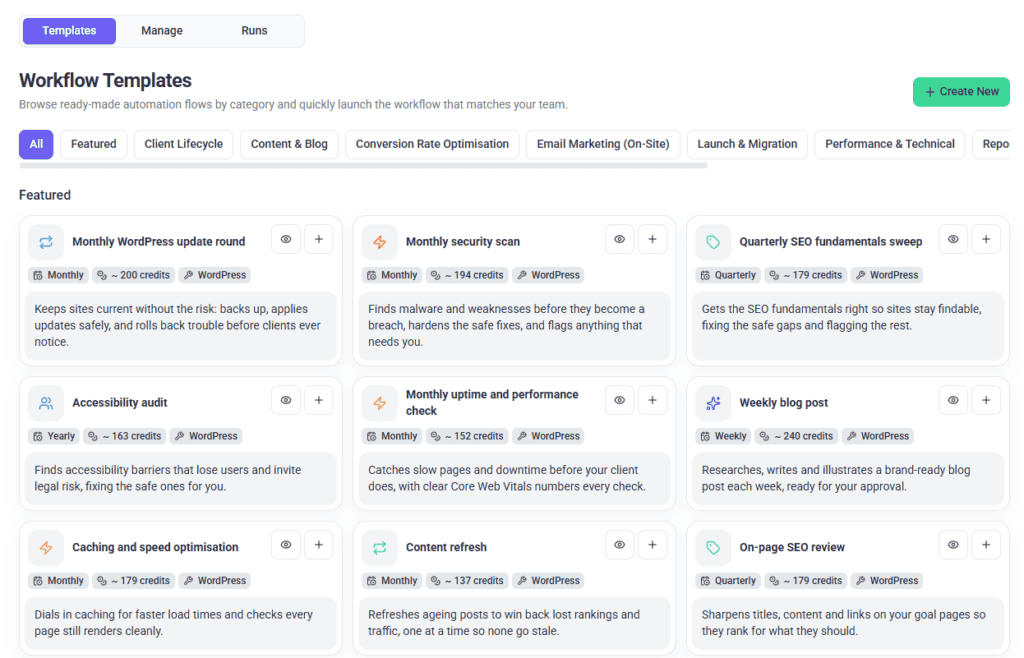
  • Open Workflows from the main dashboard.
  • Set a trigger — a status change or a new comment, for example.
  • Choose what should happen, such as a notification or an action in a connected tool.
  • Save and test it with a real task.
  • Setting up a workflow with a trigger and an action
    Setting up a workflow
    Automate the updates you’re tired of making by hand
    Rather than everything you could. A workflow that posts every status change to a busy channel gets muted within a week, and then it’s worse than nothing. Learn More About Workflows
    Note
    Integration actions appear in the workflow builder once that integration is connected. If Slack or ClickUp isn’t in the action list, connect it first. See All Integrations

    FAQs

    Can I customise the board columns?

    No. Columns are fixed, which keeps boards consistent across projects and teams.

    What are the status values?

    Open, In Progress, Pending Review and Complete.

    What are the priority values?

    Low, Medium, High and Critical.

    How do I notify my team about updates?

    Notification preferences are per person. Open the team member’s profile from the People page to manage what they receive.

    Can I integrate with other tools?

    Yes — Slack, Jira, Asana, ClickUp, Trello and others, both directly and as workflow actions.

    Will the team be told when I change a project stage?

    No. Stages are a visibility tool — tell people directly when something meaningful changes.

    Common issues

    • A workflow isn’t triggering — check the conditions match what’s actually happening, and that permissions allow the action.
    • An integration isn’t in the workflow list — connect it in Settings first, then reopen the builder.
    • The board doesn’t reflect reality — statuses haven’t been updated. A weekly review is what keeps it accurate.
    • A dragged task didn’t move — open the task and set its status or priority directly instead.
    • Nobody knows what’s next — use the Priority board view and make sure every task has an owner.

    Conclusion

    The four practices reinforce each other: stages give the project shape, owned tasks make progress attributable, the board makes it visible, and automation removes the manual updates.

    The one habit that matters most is the weekly review. A board nobody updates is a board nobody trusts, and everything else depends on it being accurate. Discover How To Handle Backlogs And Bottlenecks

    Tips & best practices

    • Schedule a regular team review to update statuses and realign priorities.
    • Check conditions and permissions first if a workflow isn’t triggering.
    • Break large tasks into smaller ones so progress stays visible.
    • Automate only the updates you’re tired of doing by hand.
    • Keep internal work in internal tasks.

    Related articles